Monday, December 7, 2020

When having a smoking area near my desk seemed normal


The good news: Only 14 percent of American adults are smokers, down from 43 percent in 1972.

The bad news: The number of smokers increased during the pandemic, even though COVID-19 harms your lungs. Boredom and stress, I guess.

More bad news: The first few years I worked at the Daily Republic, the sports department was the newspaper building's designated smoking area, so I inhaled enough burning tobacco during that time to qualify as a smoker.

Yes, my workspace was the smoking area.

Yes, it seemed like progress. Yes, the entire sports staff at the DR was subjected to hours of carcinogens every day, since any smoker in the entire building – any reporter or editor, any advertising sales representative, any front office employee, anyone who smoked – stood and puffed next to our desks.

The weird thing? It didn't seem weird. It seemed kind of normal.

Granted, this was in the mid-1980s, so everyone on the sports staff (there were five of us in those glory days) likely grew up around smokers. My dad smoked cigarettes, cigars and pipes for years – until he got cancer and quit cold turkey. (Decades later, the smell of cigars still makes me nauseous because I associate it with him smoking cigars on trips while I got carsick. I regale friends with an impersonation of my dad yelling over his shoulder for us to roll up our windows because "that just sucks more smoke back there, dammit!").

Smoking areas were a reasonably new thing when I started at the Daily Republic, baby steps to treat nonsmokers as having rights to avoid cancer-causing chemicals. Restaurants had non-smoking areas (usually a couple of tables surrounded by people who smoked like Don Draper). People occasionally asked if it was OK if they smoked in your house. Heck, it's possible that by the time I was inhaling co-workers' smoke, the cigarette machine at the pizza parlor where I worked in college was being loosely watched to ensure that a 10-year-old didn't buy a pack of Camels.

Maybe.

My first few years at the Daily Republic – until the building was remodeled and had a second story added – were spent with people hanging out and smoking while I worked. For them, it was a nice break and a chance to visit. In the pre-Internet era, they could talk sports with us and ask what happened during the day. The business writer nervously smoked while talking about what he had to finish that day. Several ad representatives talked about the 49ers or Giants or A's with us. Others merely stood there, not acknowledging anyone as they blew their toxic smoke into the room.

And it seemed normal.

In 2020, as we wear masks to avoid being exposed to a dangerous virus – and as smokers are required to huddle a long distance from the rest of us – it seems insane that in the not-too-distant past, it was considered progress to merely expose sportswriters to cigarette smoke. All day. All night.

As the advertisements for Virginia Slims (women's cigarettes!) used to say, "You've come a long way, baby!"

Reach Brad Stanhope at bradstanhope@hotmail.com.

Monday, November 30, 2020

Scientists take big leap in inevitable transition to monkeys ruling the world

I've watched the "Planet of the Apes" movies a lot lately – and not so much for entertainment.

I'm preparing for the future.

I realized the need to review those movies a few weeks ago when I read an article that described how Japanese and German researchers injected a human gene into the dark matter of monkey fetuses. Fine, right? Good for research, right?

Well, the gene they injected is the gene that directs stem cells in the human brain. The result was . . .

(Take a deep breath.)

THE MONKEY BRAINS BECAME MORE HUMAN-LIKE.

Monkey fetus brains doubled in size. The growth was in the areas that control cognition and language–growth, according to a news release from last summer, that happened by the 100th day of gestation.

Scientists fooled around with genes . . . and created super-monkeys who could speak and read!

According to the report, scientists aborted the monkey fetuses due to "unforeseeable consequences."

That's where I stop believing them, because I've watched enough movies to know while research companies may say they have things under control, but there is always a rogue scientist who is making really bad decisions.

Also, I don't think the consequences are "unforeseeable."

The inevitable consequences of this are fourfold:

  • Monkeys will gradually realize they are equal to humans.
  • Monkeys will gradually realize they are more powerful than humans.
  • Monkeys will take over.
  • Charlton Heston will wind up in a cage.

We all know it. We all realize that monkeys – all non-human primates – are better suited to be at the top of the food chain. We all realize that given the chance, they will enslave us.

Why would scientists even consider helping them get there? What possible benefit is there to experiments to see whether monkeys can make the evolutionary leap to join us as the world's most powerful species?

Listen, I like monkeys. I've long shared my dream scenario of having a monkey "butler" who wears a tuxedo, greets me with a drink on a platter and sleeps in a hammock in my living room.

As a child, I'd stand in line at my hometown zoo to watch chimpanzees Bill and Ziggy poop in their hands and throw it at us.

I enjoyed the work of Davy Jones, Peter Tork, Mike Nesmith and Micky Dolenz.

But I know that given the chance, monkeys will take over, enslave us and we'll wind up trying to keep our history alive by sharing stories during quiet chats at night in the cages.

This may seem like science fiction, but let me remind you: We now have Dick Tracy-like mobile phones where you can see the person with whom you're talking, we have electric cars, we sent a man to the moon and Betty White has been given some sort of elixir that allows her to live forever.

What seems insane to a previous generation often becomes normal to the next.

So prepare for what's coming.

Watch the "Planet of the Apes" movies with me and have a plan.

And since reading is among the skills that the monkeys kept by the presumed rogue scientists will develop, let me add this (humans can stop reading now): I'm willing to help you monkeys! I can be a useful spy. I know where bananas are kept at the store. Let me know if you need me.

Reach Brad Stanhope at bradstanhope@hotmail.com.

Monday, November 23, 2020

Brand names discussion turns into a Dumpster fire

I told Mrs. Brad I had an idea that stuck to me like Velcro: That she and I should stop using brand names to describe generic products.

We should respect the brands.

"You mean a 'hook and loop fastener?' she asked. "Velcro is a brand name."

"You got me!" I shouted with enthusiasm. "I'll write that down on a Post-In note with a Sharpie so I won't forget."

"You mean 'sticky note' and 'permanent marker,' right?" she asked.

I laughed. She was right. I had a problem saying brand names. "I wish I could use some Wite-Out on things I say," I mumbled.

"It's 'correction fluid,'" she said. "Wite-Out is a brand name,  you nitwit."

Ain't love grand? We have pet names for each other: I call her "Sweetheart," she calls me "nitwit." She doesn't even capitalize nitwit!

However, this was getting ugly. "Don't get mad at me," I said. "I know you can stew on these things like a Crock-Pot!"

"It's a 'slow cooker,'" she said. "Crock-Pot is a brand name."

I laughed again because that's what I do when I don't know what to say.

"Can  you give me a break?" I asked. "I didn't come here for verbal ping-pong."

Mrs. Brad shook her head in frustration. "You mean 'table tennis?'"

That went too far. Mrs. Brad and I rarely argue. It was almost like I was making up the entire argument inside my head. When we started dating decades ago and I was working at a Laundromat, we never argued.

"It's a coin-operated laundry," she said, lending credibility to the idea that despite the fact it was all inside my head, she could read my mind. Is this something that happens when you're married for 35 years? I needed to Google it.

"Google is a specific search engine," she told me, still apparently reading my thoughts.

"You're giving me a headache," I said, this time aloud. "I need to take aspirin."

"Brand name, nitwit," she said. "It's acetylsalicylic acid. Bayer calls their acetylsalicylic acid pill 'aspirin.'"

This had gone off the rails. I came into the house excited to propose a new rule for us and now she was giving me a verbal Powerpoint presentation on what I didn't know.

"It's a 'slide presentation program,'" she said, apparently reading my thoughts again. "Powerpoint is Microsoft's version. There are others."

I'd had enough from this know-it-all.

"Listen, this whole thing was my idea. I know that Sanka is a brand of decaffeinated coffee, for instance," I said.

"Sanka?" she asked. "Are you a time traveler from 1975? Really? Your example is Sanka?"

"This whole conversation is making me nervous," I told her. "It's turning my legs to Jell-o."

"It's 'gelatin dessert,'" she shouted. "Everybody knows that. Kleenex is a brand name for facial tissue. Frisbee is a brand name for a flying disk. Get it right!"

This was the angriest I'd seen her since that time that a guy on "The Bachelor" was really mean. "Woah, back off!" I said. "You've really drunk the brand-name Kool-Aid, haven't you?"

"Kool-Aid is a brand name, Brad," she said. "It's a flavored drink mix. And Band-Aid is an adhesive bandage. Any other questions?"

She was angry. I didn't want to make things worse.

"Sorry I angered you so much," I said, backing away. "I guess this is turned into a real Dumpster fire, didn't it?"

"Large garbage tote."

I walked out, thinking it would be nice if we had a Jacuzzi where we could both relax.

Don't say it!

Reach Brad Stanhope at bradstanhope@hotmail.com.

Monday, November 16, 2020

I haven't tried Tab in years, by the teen version of me is mourning

You know that feeling you get when you hear about an aging musician or actor dying? You haven't thought about them for years, but it makes you sad to know that they're gone? That you associate them with your youth?

That's how I felt when the Coca-Cola Co. announced last month that it was discontinuing Tab.

It was kind of like when Charlie Daniels and Lyle Waggoner died this year. My first reaction was, "He was still alive?" My second reaction was, "Bummer."

When I heard Tab was discontinued, my first reaction was "It was still being made?" My second reaction was, "Bummer."

Tab and I have a unique relationship. As a kid I didn't drink much soda (I was too dumb to realize that drinking it fast would make bubbles go up into my nose somehow. I repeatedly made that mistake and swore off soda).

At age 14, I was diagnosed with Type 1 diabetes. That was around the same time I learned how to correctly drink soda (I was slow).

When I was initially diagnosed, I was sick, so I spent a week in the hospital. That's when I learned how to give myself shots as the medical experts figured out how much insulin I needed. It was tough: Wild swings in my blood sugar, bad headaches, frequent urination and the requisite middle-of-the-night wakeups to test everything.

The only two highlights were my friend Dana visiting me to watch the baseball All-Star Game and my dad taking me out to play nine holes of golf. The only things I could drink were water and what was then called Sugar Free 7-Up (which later became Diet 7-Up), both out of Styrofoam cups.

I've never embraced Diet 7-Up because it reminds me of bad times.

At 14, there were, as far as I knew, three diet sodas: Sugar Free 7-Up, Fresca and Tab. (Research indicates Diet Rite also existed, but I was blissfully ignorant of that.)

Since I resented Diet 7-Up, my choices were Fresca and Tab and there was no comparison: Citrus-flavored Fresca was OK, but Tab was a cola. It was Diet Coke before Diet Coke existed. For a teenage diabetic, Tab was the only soda worth drinking.

It was my only cool soda.

I drank a fair amount, then other diet sodas emerged (or I became aware of them).

Diet Coke and Diet Pepsi became things.

Knockoff brands (Shasta, Cragmont, etc.) had diet sodas.

Ultimately, I was OK with most diet drinks. Now I drink whatever brand is available (I may be the only living person without an opinion in the Coke vs. Pepsi debate).

I haven't had a Tab for years. I presumed it had been discontinued and replaced by the multiple iterations of Diet Coke. I hadn't thought of Tab for years.

When I saw that Tab was being discontinued, I remembered that Tab existed, then I was sad that it's leaving, despite the fact that I've paid zero dollars to purchase Tab in the past 35 years.

I don't drink Tab.

I wouldn't drink Tab in the coming years if it was still around.

But inside me is a 14-year-old, newly diagnosed diabetic who thinks Tab is pretty special.

Reach Brad Stanhope at bradstanhope@hotmail.com.


Monday, November 9, 2020

Worst days of the year, LA sports titles, squeeze mayonnaise and more

Emptying out my virtual columnist's notebook with thoughts, questions, answers and dumb jokes – including naming the saddest day of the year: The first Sunday in November.

That was a week ago, when we returned to standard time.

I've written plenty about the daylight saving time vs. standard time debate and my stance is clear (daylight saving time should be year-round). However, this is more about what the return to standard time signifies than the merits of changing our clocks twice a year.

The end of daylight saving time is really the official beginning of winter. Days are getting shorter and that change makes it more dramatic. Sure, the holidays are coming, but they're inexorably linked with short days and cold, wet weather. Warm-weather activities – hanging around outside, watching baseball, enjoying the sun – are over. The start of standard time is the saddest day of the year.

Here are the other days in my top-five list of saddest days:

5. Black Friday. Many people love the official kickoff of Christmas shopping season, but even more people dread it. If you get that day off from work, it often feels wasted, since it comes after Thanksgiving and really isn't good for doing fun things.

4. Valentine's Day. I don't know what is worse: Seeing people share mushy thoughts on social media or seeing others talk about how much they hate it. If you love Valentine's Day, you're under attack. If you hate Valentine's Day, you're under attack. It's a bad day.

3. The second day of school (pre-pandemic). For kids, the first day of school is exciting. The second day is when it sets in: This is going to be a long year.

2. Dec. 26. The day after Christmas kicks off several weeks of winter with only a smattering of holidays included.

1. The start of standard time. See above.

• • •

Bad news for Bay Areas sports fans: The Los Angeles Lakers and Los Angeles Dodgers won championships in the past month.

Good news for Bay Area sports fans: We'll forever be able to dismiss those championships as tainted by being played in seasons changed by the pandemic.

I guess everyone wins.

• • •

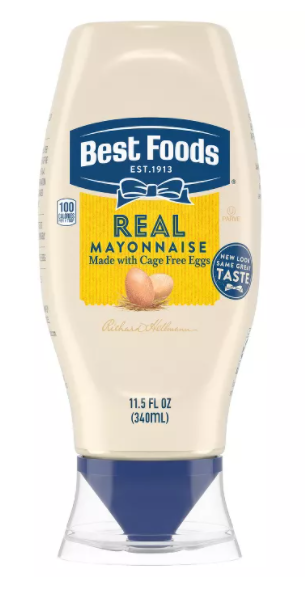
Putting mayonnaise in squeeze bottles – like ketchup companies did a generation earlier – is one of the greatest technological advances of the past decade. Name something better.

• • •

I don't trust book recommendations from people who read only on mobile devices, because I secretly think they don't read books.

But if you say you read books on mobile devices and have recommended a book to me, I don't mean you, of course.

• • •

This might make me appear old, but every time I see those Burger King commercials where they rave about getting two burgers for $5, I think that sounds about right for a fast-food burger: $2.50 per burger.

Then again, I still have a Hotmail email address, so I am old.

• • •

I think I speak for the majority when I say I'm exhausted from waiting for election results.

Finally, Thursday, we knew: Baby Nancy, sidewalk chalk and Jenga were inducted into the Toy Hall of Fame in Rochester, N.Y.

Like you, I spent most of the morning hitting refresh on my browser, waiting to see if we finally had a winner.

I can't imagine there is any recent election-related as dramatic as that.

Reach Brad Stanhope at bradstanhope@hotmail.com.
Monday, November 2, 2020

When I embarrassed myself at an election editorial board meeting

The worst election experience of my life occurred in a conference room with several candidates for the Fairfield-Suisun school board.

As we prepare for Election Day 2020, let me take you back in time. To 2011 or 2012.

I had recently returned to the Daily Republic as news editor after a three-year hiatus. Most of my previous tenure was as sports editor, so I was concerned that people aware of my history wouldn't take me seriously when it came to covering and editing hard news. Things like City Council articles. Investigative pieces. Business articles.

I never received real criticism of me for that – it was insecurity, I guess – but I was aware that it could happen.

When election time came, I was partly responsible for coordinating our coverage, which was fine. I was also part of the four-member editorial board that interviewed candidates and made the Daily Republic's endorsements. The editorial board included me, Glen Faison (the managing editor), the publisher and assistant publisher. We would interview candidates as a group, meet and settle on our endorsements.

I felt a little nervous going into the interviews, but I also knew that my position in life helped. I had lived in Suisun City for 25 years. My kids were in local schools. I worked in town. I knew a lot of people. Heck, I knew some of the candidates, at least casually.

The school board race had several candidates: I think there were eight people running for four spots. We all gathered in the Daily Republic conference room, crowded around the big table with a few candidates sitting behind others.

The publisher took the lead in the meeting. He was no-nonsense, asking very direct questions and keeping things moving. Some of the candidates were articulate and answered clearly. Some seemed overwhelmed by the situation. Some had no idea what he was asking.

I waited, with a couple of questions to ask that would show I belonged. I listened and took notes.

Suddenly, there was a noise. A phone ring tone.

"Oh no, someone brought in their phone and didn't turn it off," I thought, shaking my head. "How embarrassing. And what a time for it to happen."

Everyone else noticed, too.

No one moved.

The ringtone was a song: The theme from "Sanford and Son."

"Wow," I thought. "The person who didn't turn off their phone has the same ringtone as me. Weird."

The meeting stopped. Still, no one moved. It was uncomfortable. The song played on. Wasn't the dummy who owned the phone going to turn it off?

I realized people were looking at . . . me.

My phone was vibrating in my pocket as the "Sanford and Son" theme song continued.

Oh no!

What the heck? I always left my phone at my desk! No one ever called me! How did this happen?

Slowly, cheeks burning, I reached into my pocket and pulled out the phone. The song got louder since it was no longer muffled. Everyone watched as I turned it off, then returned it to my pocket.

"Sorry," I muttered.

I don't remember the rest of the meeting. I don't remember who we endorsed. I don't remember anyone acknowledging my misstep, although I'm sure all of my bosses wanted to do so.

I've voted in 11 presidential elections and at least twice that many local elections. I remember very few voting experiences.

But when the "Sanford and Son" theme played when I was pretending to be a serious journalist? That's burned in my memory.

Reach Brad Stanhope at bradstanhope@hotmail.com.

Monday, October 26, 2020

No playing around when these election results are announced

This won't be the first time you've heard this: We're on the verge of the most consequential election of our lifetimes.

When the results are officially announced Nov. 5, we'll finally have clarity. Will the voters get it right (Yahtzee, sidewalk chalk, bingo)? Or will they make a bad choice (Masters of the Universe toys, Risk)?

The consequences are enormous.

We're all wondering which three toys will be inducted into the Toy Hall of Fame this year in Rochester, N.Y.

Yes. The real election with results announced next week.

As you likely know, the 12 nominees for 2020 were announced earlier this year. Even during a pandemic, the Toy Hall of Fame goes forward, like a slinky (Class of 2000) bouncing down a long stairway or a Big Wheel (Class of 2009) going down a steep driveway. The nominees are the five aforementioned toys, as well as Baby Nancy, Breyer Horses, Jenga, Lite-Brite, My Little Pony, Sorry and Tamagotchi.

The Toy Hall of Fame began inducting toys in 1998. Most picks are great, but over the years, the hall has made the same obvious oversight, again and again: No version of the Nerf ball has been inducted, making it the Dan Marino, Barry Bonds or Susan Lucci of the toy world. Close, but never the chosen one.

Anyway, this year's ballot has some weaknesses in it, even if you ignore the Nerf snub. There are a couple of obvious slam-dunks (no offense to Nerf hoop), but even they aren't as strong as some earlier choices. For instance, the best group of the past decade is probably the Class of 2017, with the aforementioned Wiffle ball, Clue and the paper airplane.

All three of those rank higher than any of this year's nominees.

This year, sidewalk chalk is a strong favorite. While I don't think it existed when I was a kid (at least I didn't know about it. We just used regular chalk to play tic-tac-toe, design hopscotch boards and make lines to divide bike "lanes" on the road), but sidewalk chalk has been a part of childhood now for decades. Who doesn't like it?

The other favorite is likely bingo. While the Toy Hall of Fame website shows a specific board game of bingo, the nomination is for bingo in general. This is a rare multigenerational choice, as it's popular among kids (I remember playing it in school to learn letters and numbers, then playing it in middle school Spanish to learn numbers and letters: "Bay ocho. . . Bay ocho"). It remains a staple for seniors. Bingo seems an obvious choice.

The third slot is wide open. As mentioned, I'd go with Yahtzee, but I acknowledge that the game isn't as much fun as I remember. I could see Jenga being chosen, too. Sorry deserves consideration if for no other reason that the memorable TV commercials of the 1970s.

For now, hold your breath and wait for the election results, which will be announced a 7:30 a.m. Nov. 5. Let's hope the losers accept the decision with grace.

And let's hope Nerf gets nominated in 2021.

Reach Brad Stanhope at bradstanhope@hotmail.com.

Monday, October 19, 2020

After months of a pandemic, will we ever return to offices?

I've worked in offices since I was 21: In newsrooms. In one cubicle among hundreds of other cubicles. In a converted warehouse with four offices. In my own office among dozens of cubicles.

But always in offices.

For the past seven months, I've worked from home and like many Americans, I am not eager to return.

That was one takeaway from a survey taken in late summer. The Wells Fargo/Gallup survey showed that 42 percent of workers surveyed had a positive view of working remotely (from home), while only 14 percent didn't like it. A similar survey in June showed that about one-third of workers would prefer to never return to their office, while more than 70 percent said they'd like to work from home at least twice a week.

One thing the pandemic taught office workers: Working from home is pretty good.

A caveat: Many people don't work in offices. Many people work in retail or food service or some other area and they either were deemed "essential  workers" and had to show up despite the pandemic and/or lost their jobs. Not everybody has an office gig and if you don't, this is probably irritating.

Sorry.

But I suspect many people had a similar experience to mine. Once the quarantine started, the first few weeks were weird. We were home, remotely logging onto an office server. Our work laptops were on the kitchen table or in a rarely-used office or in the middle of a chaotic bustle of kids and activity.

It didn't seem normal. Work was harder because there were more distractions. We were anxious about COVID-19. We wanted normal.

I remember asking co-workers when they thought we'd return to the office. I said May 1. Others said April. Someone said June. Someone said August and I laughed at her.

As time passed, working from home became normal. Mornings were less busy, with no commute. Business casual took on a new meaning (T-shirts and shorts every day). Zoom calls, Skype calls, IMs and emails took the place of breakroom conversations and staff meetings.

At our home, Mrs. Brad – who probably wondered if she could survive spending all day at home with an twitchy, active extrovert – got into her own pattern of work (away from me). We adjusted.

It's been seven months. It seems normal.

The COVID-19 pandemic has permanently changed life. Going forward, we'll no longer find it unusual if someone wears a mask in public. We will take it seriously when a new threat is announced. We'll use technology to meet with other people.

Perhaps the most fundamental difference will be how we office workers work. After years of startups and high-tech companies giving employees the opportunity to work from home a day or two a week, we've discovered that most of us can be just as productive at home as at the office.

Working from home makes sense.

In 2021, it will be harder for our bosses to insist we need to be in the office to be productive. In fact, they may realize it's a good deal to let people work from  home and have smaller in-person offices.

The American workplace may be in the middle of a revolutionary change. All it took was a global pandemic, the advancement of technology and a few months to get used to it.

Reach Brad Stanhope at bradstanhope@hotmail.com.

Monday, October 12, 2020

In an unprecedented time, there is still a 'silent' majority


Americans are angrier than they've been in a generation. Maybe angrier than ever. A lot of people are spewing bile.

Most aren't.

Don't get confused by social media and the outrage du jour. The majority may be angry, but it's still largely silent. Or at least reasonably polite.

Everybody isn't screaming.

Richard Nixon used the term "the silent majority" in 1969 to describe what he considered the majority of Americans – a mass of folks who supported the Vietnam War, but didn't take to the streets as antiwar protestors did.

Nixon may have been wrong – he sure was within a few years, when most Americans opposed the war – but the phrase stuck. Variations of it have been used many times, with varying degrees of accuracy.

However, when I say "the silent majority," I don't mean one side of the political debate. I mean the people screeching on social media aren't the majority.

They're the loud minority.

Think about that the next time you get irritated about people being mean or hostile or dishonest.

They may be right. They may be wrong. They're not the majority. Everybody isn't ranting.

Back when I was an editor at the Daily Republic, one of my duties was to monitor the online comments on the newspaper website.

People could post anonymously. There were key words that would automatically send a post to moderation, but people found ways around it: Using symbols instead of letters. Making slight misspellings. Making racist comments that didn't include a forbidden word.

I had to review comments a couple of times a day. I had to reject some comments that snuck through. I had to approve some comments that had been incorrectly flagged. I had to read all the awful comments.

I once heard a radio talk show host say he loved the listeners, hated the callers. I had a variation: I loved the readers, but disliked most commenters.

That's where we are now in political discourse. It seems like everyone is hostile and angry and mean.

However . . .

Remember that you only see on social media what is posted. You don't see what isn't posted.

You don't see the silent majority.

Seeing 10 tweets or 10 Facebook posts that are outrageous doesn't mean that everyone is outrageous. It means that those 10 people are outrageous. They want you to hear their opinion. They are angry and want blood.

The majority of us may be angry. We may be passionate. We may be convinced we're right and the other side is wrong.

But most of us aren't screaming it from the rooftops, posting it on Facebook, tweeting it or even commenting on it on newspaper websites. Most of us aren't insulting those who disagree with us.

Social media makes us seem meaner, although it really just amplifies what was already there. The past four years has seen an unprecedented level of vitriol in politics. You can decide who's to blame (I know who I blame), but don't make the mistake that everyone is mean and everyone is hostile because "everyone" on social media seems that way.

The silent majority may be angry and may have strong opinions. But they don't post them all the time and bore us.

Most of us are still civil.

Reach Brad Stanhope at bradstanhope@hotmail.com.

Monday, October 5, 2020

Parasites are our friends, so we need to help save them

Save the tapeworm!

Because the only thing better than a site is a parasite(s).

Get it? That's one of the ideas in my latest marketing plan: Improving the image of the lowly parasite with clever marketing.

Yes, parasites: Tapeworms. Hookworms. Bed bugs. Tsetse flies. Lice.

Maybe a T-shirt that says, "Have a lice day!" Or a remake of the cheesy 1960s song, "Itsy Bitsy Teenie Weenie Yellow Polka Dot Bikini," but as "Itsy Bitsy Tsetse Weenie Yellow Polka Dot Bikini."

You know, something the kids will like. Because we need to help parasites. We need to raise their Q score. A movie called "Parasite" winning the Academy Award for best picture in 2019 was the first step, but we need more.

"Parasites have a major public relations problem," says Chelsea Wood, assistant professor at the University of Washington's School of Aquatic and Fishery Sciences in an article on NPR's website.

Here's why: Parasites make up about 40 percent of animal species in the world., but as much as 10 percent of parasites might go extinct in the next 50 years, due to loss of habitat.

Yet nobody cares.

Save the whale? How about save the lice? Or the Nematomorpha, also known as a hairworm. A hairworm is the parasite that controls the brain of a cricket.

"When they're in the cricket, they manipulate the cricket's behavior, making the cricket jump into water, basically committing cricket suicide," Skylar Hopkins, assistant professor of applied ecology at North Carolina State University, told a reporter for NPR. The article continues to inform us that "once in the water, the shockingly long hairworm bursts out of the cricket to complete its life cycle."

Kind of magical, right? If you can get past the idea of something called the hairworm, it being "shockingly long" and that it controlled a cricket's mind.

The thing about parasites is that we don't even know most of them. The NPR article said that scientists have identified only about 10 percent of parasites in the world, which allows 90 percent of the parasitic world to avoid paying taxes and to "live off the grid," presumably.

Save the parasite.

Wouldn't it be sad to lose a huge percentage of living animals without even knowing them?

I mean take the scabies. Or the lung fluke. For every species of them, there could be nine other species that we haven't identified. And one-tenth of them could go extinct by 2070.

A team of scientists have created a global parasite conservation plan, which is akin to the efforts to preserve the bald eagle and save the whale. Except it's for worms and other parasites. (By the way, they don't include parasites who harm humans, so put away the torches and pitchforks.)

Parasites are often seen as living off others, but we overlook the fact that they contribute to circle of life. Without parasites, there would be much less biodiversity. And fewer nightmares about tapeworms.

And how would a world without parasites look?

"Conservation often talks about this metaphor: If you pull the nails out of the side of an airplane one by one, how many can you take out before the plane can't fly?"  Colin Carlson, assistant professor and biologist at Georgetown University, told NPR. "And we're looking at that with parasites now. If we see the total collapse of parasitic ecosystems, we have no idea what that's going to do."

But we know it will change things. We need to save the parasite.

If you agree, consider posting the link to this column to your favorite website. Or, to be more effective post it to a parasites.

See? Parasites are fun! Let's save them.

Reach Brad Stanhope at bradstanhope@hotmail.com.