Monday, January 7, 2019

Our solar system's biggest crisis: Saturn's disappearing rings


Saturn is about to learn what professional athletes have known for a long time: Everybody judges you by how many rings you have.

The sixth planet from the sun could soon join Karl Malone, Barry Bonds and Jim Kelly as being famous, but having no rings (championship rings for humans). This is significant, for as long as humans have known Saturn existed, the most memorable thing has been its rings.

Saturn has four main groups of rings and three minor groups of rings. It's simpler to say Saturn has seven rings, which is the same as Elizabeth Taylor and one less than Mickey Rooney. (A joke for people 70 and older!)

Astronomers have bad news: Saturn's rings are disappearing, according to data from Voyager 1 and Voyager 2.

“The rings are being pulled into Saturn by gravity as a dusty rain of ice particles under the influence of Saturn’s magnetic field,” NASA said in a statement. NASA said the ring loss is happening at a “worst-case scenario” rate, which is the same thing that Elizabeth Taylor thought after marriage No. 3 or 4.

The bad news: It's happening fast. The good news? "Fast," in this case, means over the next 300 million years, so not so fast to us.

As everyone knows, Saturn was discovered by Galileo in 1610 and the rings were discovered 49 years later by Dutch astronomer Christiaan Huygens. OK, no one knows that, but still, it's true.

For centuries, school children have know Saturn by its rings, in the same way we know Robert Horry (seven NBA championships), Yogi Berra (10 World Series titles) and Charles Haley (five Super Bowl titles) by theirs. Rings were Saturn's thing, in the same way that each of the planets in our solar system are memorable (and yes, I'm including Pluto).

Here's how we all remember the planets, starting closest to the sun and moving out.

  • Mercury was the lead singer of Queen.
  • Venus is the name of a No. 1 song by Frankie Avalon that and a different No. 1 song by both The Shocking Blue and Bananarama.
  • Earth is where the chalupa was invented.
  • Mars is the home of little green men.
  • Jupiter rhymes with stupider, which is helpful in writing limericks (but is poor grammar).
  • Saturn has rings.
  • "Uranus" is always worth a cheap laugh.
  • Neptune is god of the sea.
  • Pluto is a beloved cartoon character.

It's been that way for decades (at least since Bananarama reached No. 1 with its version of "Venus" in 1986), but now it may change, because Saturn won't be so special after all. In another 300 million years, Saturn will just be another planet in the solar system, looking for something to make it special.

And what will school children in the year 3000002019 do to remember Saturn?

They won't remember the rings. Saturn will be as forgettable as Charles Barkley, John Stockton, Barry Sanders, Dan Marino, Ernie Banks and Ken Griffey Jr. – all ringless.

Saturn is about to learn a lesson that Duke Ellington tried to teach via song: It don't mean a thing if it ain't got that ring.

The word "Uranus," on the other hand, will still be funny in the year 3000002019.

Some things are timeless.

Reach Brad Stanhope at bradstanhope@hotmail.com.

Monday, December 31, 2018

No matter what, the coming year won't be worse than 536


As we prepare to begin 2019, pessimists can take comfort in one thing: As bad as 2019 might be – or as bad as 2018 was – they pale in comparison to 536.

Yes.

Five-thirty-six. The worst year ever.

Think about your worst year: Maybe it was the year you lost a job or had your heart broken or had a major health issue. Maybe it was the year the Warriors lost Game 7 of the NBA Finals and someone you detest won the presidential election. Maybe it was the year assassins killed Bobby Kennedy and Martin Luther King Jr. and America's cities burned. Maybe it was the year you lost all of your computer data because of Y2k.

Michael McCormick says 536 was worse.

Because 536 was . . . wait . . .

What happened in 536?

Plenty, according to a report by McCormick that can help us gain perspective for 2019.

McCormick, a historian and archaeologist who is also chairman of the Harvard University Initiative for the Science of the Human Past, called 536 "the beginning of one of the worst periods to be alive." (Which  is how I describe my feelings when I walk into a dentist's office.)

Consider this: In 536, a fog plunged most of the known world – Europe, the Middle East, much of Asia –into darkness. Around the clock. For 18 months. We now know it came when a volcanic eruption in Iceland caused ash to spread across the Northern Hemisphere's skies and block out the skies.

In 536, people just knew it was dark. Day after day.

That year began the coldest decade in the past 2,300 years. Snow fell in the summer. People starved because crops failed. People had to wear hoodies in August!

Five years later, as normalcy returned, the bubonic plague struck  and wiped out half the population of the eastern Roman Empire.

Imagine that: Eighteen months of darkness, changing the environment and causing people you know to literally starve to death, followed by the outbreak of a deadly, mysterious virus that wiped out half the remaining population. It makes standing in line at Starbucks seem less terrible, doesn't it?

And that's not all. According to some research I did, there was more bad news from 536:


  • Roman leaders Kentavious Caldwell-Pope and Sindarius Thornwell took power, increasing hostility between government factions and  instituted a surprising tariff on imported porridge and gruel while demanding a wall be built to separate Rome from the rest of the world. (Editor's note: This is wrong. Kentavious Caldwell-Pope and Sindarious Thornwell are current NBA players.)
  • Verona Raiders owner Marcelius Davis announced his gladiator team would move to Las Vegas, leaving residents of the Roman province of the Ostrogoth Kingdom holding the bag.
  • The internet was down for the entire year, making it impossible to stream Netflix and post Instagram pictures.
  • Your ancient ancestor died of old age at 35, leaving his wife, children, grandchildren and great-grandchildren to mourn (however, he did, by the standards of the day, live a good, long life).

One thousand, four hundred and eighty-three years after that year, there are lessons to be learned.

Things aren't as bad as they seem.

Getting a cold is nothing like catching the plague.

There's a huge difference between a bad meal at a restaurant and starving to death.

And most importantly: Keep an eye on those Icelandic volcanoes. We don't want a repeat of 536!

We'd all die if the internet went down for a year. Talk about a plague!

Reach Brad Stanhope at bradstanhope@hotmail.com.

Monday, December 24, 2018

How well do you know Solano County? Take my quiz

It's the end of the year, which means the holiday season, meaningless college football bowl games, unpredictable weather and my annual quiz about Solano County.

It's the most wonderful time of the year.

Below are 20 questions on Solano County. You live here, so you should at least be able to guess. Right?

Get your No. 2 pencil, a piece of scratch paper and get ready to answer. I'll wait.

Ready? Let's go.

QUESTIONS

1. Within five miles, how many miles is it from where Interstate 80 enters Solano County in the west (Carquinez Bridge) until it leaves in the east (before Davis)?

2. Name the seven cities in Solano County.

3. What was the last name of the person for whom the city of Dixon was named?

4. Within 1,000, how many inmates reside in the two-prison complex in Vacaville?

5. What was the leading crop (in dollar value) in Solano County in 2017?

6. The four Wade brothers include Daily Republic column-writing siblings Tony and Kelvin, as well as OT and Scott. List them in order, from oldest to youngest.

7. What's the best fake name for another Wade brother?

8. After whom is Travis Air Force Base named?

9. What is the closest international airport to Fairfield City Hall?

10. What five counties border Solano County?

11. If you boarded an Amtrak train in Vacaville and rode it to Richmond, would it cost more or less than $25 for a ticket?

12. Should I follow the lead of hotels and skip the 13th question (scheduled to be next) because some people think it's bad luck?

14. There are five elected county supervisors in Solano County. Name at least four of them.

15. There are four interstate freeways and five state highways in Solano County. Name all nine.

16. What two members of the House of Representatives represent Solano County?

17. In what decade did the population of Solano County first surpass 100,000?

18. Which city has a larger population: Fairfield, California, or Fairfield, Connecticut?

19. In how many months is the average high daily temperature in Fairfield 80 degrees or higher?

20. In what month does Fairfield traditionally receive the most rain?

ANSWERS

1.  A tricky question, because the freeway briefly goes into Napa County for 1.47 miles just before American Canyon Road. But it's 43.01 miles from the entrance to the exit of the county. If eliminating the Napa County portion (which would make it 41.54 miles) helps your answer, take it!

2. Benicia, Dixon, Fairfield, Rio Vista, Suisun City, Vacaville, Vallejo.

3. Thomas Dickson. The city was originally named Dicksonville after Dickson donated land for a railroad depot, but when a shipment of merchandise arrived in 1872, it was addressed to "Dixon," a name that stuck.

4. 6,459. As of Dec. 12, the California Medical Facility had 2,336 inmates and California State Prison Solano had 4,123.

5. Walnuts, bringing in $47.4 million. (Nursery products were second, almonds third.)

6. OT, Tony, Kelvin, Scott.

7. Groucho (also acceptable: Jermaine, Jeb, Toni).

8. Brigadier Gen. Robert F. Travis, who was killed in a plane crash at the base in 1950. Eighteen others were killed in the crash.

9. Sacramento International Airport is 46.7 miles from City Hall. The Oakland Airport is 49.9 miles (San Francisco is 57.1 miles, San Jose is 76.9 miles).

10. Contra Costa, Sonoma, Napa, Yolo, Sacramento.

11. TRICK QUESTION! There is no Amtrak station in Vacaville!

12. Skip it. But give yourself credit for getting it right. Take credit for No. 13, too. That's two bonus points.

14. Erin Hannigan, Monica Brown, Jim Spering, John Vasquez, Skip Thomson.

15. Interstates 80, 505, 680, 780. State highways 12, 29, 37, 84, 113.

16. John Garamendi, Mike Thompson. Both are Democrats.

17. The 1940s. In 1940, the population was 49,118. In 1950, it was 104,833.

18. It's not even close: Fairfield, California. has an estimated 116,266 and Fairfield, Connecticut, has an estimated 62,105.

19. Four: June (85), July (89), August (89) and September (86).

20. December, with 5.08 inches on average.

SCORING

16-20 right: You are a genius. Or you cheated.

11-15 right: Solid, but could be better.

6-10 right: Considering you got two freebies, this is OK. Do better next year.

0-5 right: Who are you, Jeb Wade?

Reach Brad Stanhope at bradstanhope@hotmail.com.

Tuesday, December 18, 2018

Toy Hall of Fame misses out on obvious choice


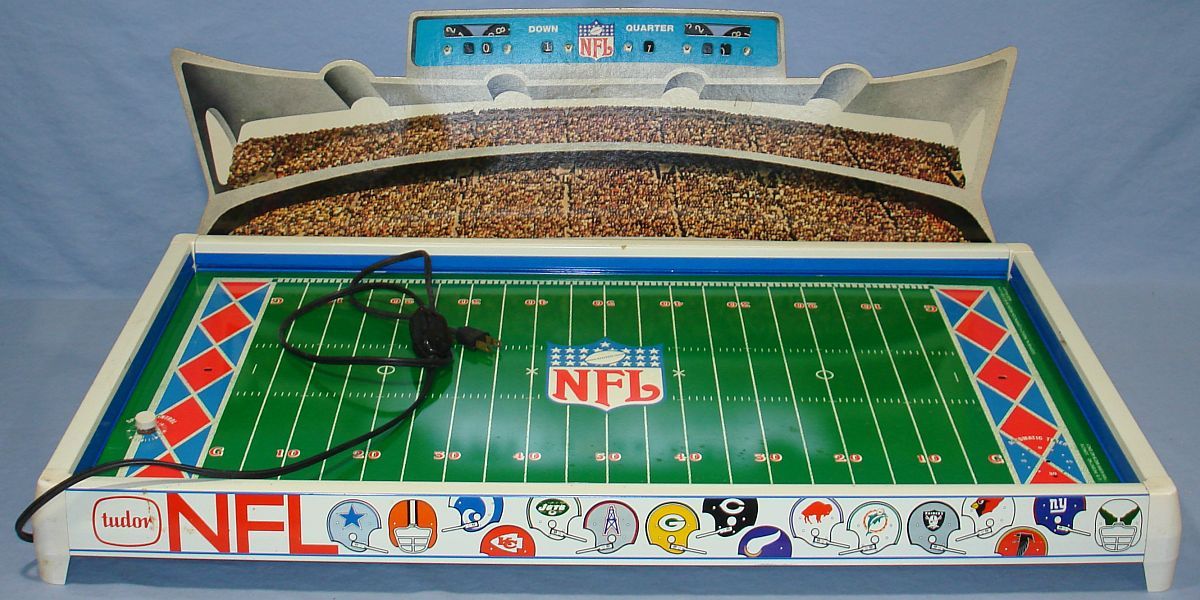
When I asked my sister's Magic 8 Ball in 1973 whether my Electric Football game would ever be a member of the National Toy Hall of Fame, it told me, "It is decidedly so."

Maybe eventually, but not yet.

Although Electric Football remains the Barry Bonds of the Toy Hall of Fame – the greatest non-inductee in history – Magic 8 Ball was one of three toys named to the Hall this year, joining Uno and pinball in the highest honor for playthings.

The National Toy Hall of Fame, as you undoubtedly know, is part of The Strong Museum of Play in Rochester, N.Y. It's where the greatest toys are honored.

Frankly, 2018 was a down year – kind of like when the Baseball Hall of Fame in 2012, when Ron Santo and Barry Larkin were the inductees.

Magic 8 Ball, Uno and pinball?

I enjoyed using a Magic 8 Ball to ask embarrassing questions about my sisters, played Uno with little kids who couldn't wait for adults to have only one card and lost many quarters before realizing I couldn't play pinball, this year's class lacks a headliner.

Consider previous classes: In 2000, bicycle, jacks and slinky were all named. In 2003, G.I. Joe and Scrabble were both chosen. How about the legendary class of 1998 (the National Toy Hall of Fame equivalent of the 2003 NBA draft or 1984 NFL draft), which included Barbie, LEGOs, marbles and frisbee? Heck, 2017 had paper airplane and wiffle ball.

This year's class? Meh.

It's particularly bland when you consider toys that were passed over: Tic-tac-toe, chutes and ladders, chalk and the aforementioned Tudor Electric Football.

Read that again. Electric Football – arguably the defining example of sports games that are expensive, ubiquitous and don't work – is not in the National Toy Hall of Fame.

Electric Football was perhaps the most dramatic Christmas present of my childhood: I got 49ers vs. Rams. I applied the numbers to the plastic players, rolled up the cotton footballs and got ready.

Then I turned the field on and realized it was just a metal board that vibrated and made the "players" bounce in circles until one touched the player with the cotton football, thereby "tackling" him.

Sure, it was disappointing, but I kept playing, hoping a miracle would happen and my players would act like they did on the commercials.

If that doesn't make it Hall of Fame worthy, I don't know what would.

Electric Football has to go in next year. And as an aside, how is it that chalk is on the outside while stick, blanket and swing are members? How else do you draw on a sidewalk? Or play hopscotch? Or even write on a chalkboard?

You need chalk. But chalk isn't in the Hall of Fame. It, too, should have gone in this year.

Listen, I don't have a problem with Uno, Magic 8 Ball and pinball. I just think the voters in the Hall of Fame need to wise up.

Otherwise, they're in danger of metaphorically  bouncing around on a vibrating metal field, waiting for something to happen.

You know, like Electric Football.

Reach Brad Stanhope at bradstanhope@hotmail.com.
Tuesday, December 11, 2018

Rudolph the bullied reindeer? A reasoned analysis

Perhaps no annual Christmas special is more beloved than "Rudolph, the Red-Nosed Reindeer."

Perhaps no annual Christmas special is under more fire than "Rudolph, the Red-Nosed Reindeer."

The story of a young reindeer overcoming the ridicule of his peers to heroically lead Santa's sleigh on a foggy Christmas Eve has become the subject of criticism in recent years due to allegations of bullying, bigotry, sexism and other indiscretions.

Is the annual TV special wrong or is it beautiful? Should we celebrate the great work of Arthur Rankin and Jules Bass or should we boycott the show because of the nastiness?

Let's look at it from both sides, now. Like love. (See 1968 Judi Collins hit, written by Joni Mitchell.)

Here are the accusations and the defense for four characters most called out for abusive behavior in the annual "Rudolph, the Red-Nosed Reindeer," which showed twice this year on CBS, most recently Saturday night.

Donner. Rudolph's father is proud of his newborn son . . . until he sees his red nose, at which time he shouts to keep it covered in order to gain self-respect.

Accusation: Donner, whose love should be unconditional, teaches his son self-loathing and that being different is bad, likely dooming Rudolph to years of doubt.

Defense: Donner is typical of his generation. He knows Rudolph will have to toughen up to avoid being someone's venison dinner. Like the father in "A Boy Named Sue," Donner knows this world is rough and if a deer's going to make it, he's got to be tough.

Comet. In his role as reindeer coach, Comet not only mocks Rudolph for being different, he encourages the other young reindeer to ignore him. "Let's not let Rudolph join in any other reindeer games," he says, making exclusion an official policy.

Accusation: Simple. He is in power and not only excludes Rudolph, he coerces Rudolph's peers to join in.

Defense: He's a P.E. coach. The show was made in 1964. This is an accurate portrayal.

Clarise's father. When the cute doe shows interest in Rudolph, he says, "No doe of mine is going to be seen with a red-nosed reindeer!"

Accusation: Bigotry. Plain and simple.

Defense: In Clarise's father's culture, red-nosed reindeer are outcasts. He is blinded by years of cultural prejudice. He's a bigot, but he believes it's heritage, not hate.

Santa. Perhaps the biggest disappointment is that the CEO of the North Pole berates Donner for having a red-nosed son, chases Rudolph away and allows a culture of abuse led by Head Elf (no name, just a job title), who targets Hermey, an elf who is interested in dentistry, but is forced to make toys. We presume Hermey isn't the only dissatisfied elf, but their voices are muted.

Accusation: Allowing and encouraging a culture of slavery and abuse. Where are his human relations people?

Defense: He gives everyone gifts, he's old, it's always been like this. Ho ho ho.

Conclusion: While "Rudolph" is ultimately a story of redemption, a lot of (male, authoritarian) characters get a pass for unacceptable behavior before they find that the young reindeer is indeed useful. Watch the show, enjoy it, but don't trust the message, which is that you can get hateful people to love you if you just do something that benefits them.

Ho ho ho.

Reach Brad Stanhope at bradstanhope@hotmail.com.

Tuesday, December 4, 2018

Scary news about fast food consumption

When I was in high school, like many people, I worked at a McDonald's.

It was a great job for a 17-year-old, mostly because most of my co-workers were the same age and because the number of employees made it easy to get time off if needed.

There was a third benefit: Working at McDonald's made me familiar with the menu and comfortable ordering McDonald's food the rest of my life.

The downside? One of my responsibilities was to wander the parking lot, sweeping up filth and emptying the various garbage cans into a large Dumpster.

Two or three times, I did that job at night with my mind wandering in a way that a teenager's mind wanders. I gathered bags of trash and climbed the mini-ladder to throw them into the Dumpster.

I opened the lid to see a homeless man stand up from inside it, frightened at my interruption as he foraged for warm, thrown-out burgers. We were face to face, both startled.

I didn't scream, but years later, I'm still startled. Just writing it made my adrenaline rush.

But you know what's more startling?

A recent study by the National Center for Health Statistics revealed that 37 percent of American adults said they'd eaten fast food in the past 24 hours.

Every day, more than a third of us eat fast food!

Not surprisingly, the study showed that the appetite for fast food – or at least the consumption of it – decreases as we get older. But not as much as you think.

The study showed that 45 percent of people in their 20s and 30s eat fast food daily. That drops to 24 percent of those 60 and older.

That's right, one-quarter of grandparents (my presumption for people 60 and older) eat fast food.

Every day.

A write for Healthday reported on the study and spoke with a health official.

"Most fast food is not good for our bodies," said Liz Weinandy, a registered dietitian at Ohio State University's Wexner Medical Center.

Next up, Weinandy will say that sharp glass is not good for our skin, acid is not good for our eyes and wearing a mullet is not good for our social standing.

The Healthday article also quoted Melanie Boehmer, a registered dietitian at Lenox Hill Hospital in New York City.

"On any given day, over one-third of Americans consume fast food – that's a lot of Big Macs and pizza," she said.

Boehmer not only assessed the study correctly, she identified two of my early jobs. After McDonald's, you see, I worked for years at a pizza parlor. My loyalty to the pizza parlor is such that I don't consider pizza "fast food." I consider it "Italian food."

Anyway, this study is shocking. We all knew fast food was popular and we are familiar with the stereotype of young people lining up to get a Big Mac or Chalupa or Sourdough Jack.

But that one-third of us eat it daily and that one-fourth of people in their 60s do so is stunning.

Had you and I realized that this was coming when we were 17, maybe we would have stayed in fast food.

Just avoid the Dumpsters. They are more scary than a line of seniors at McDonald's.

Reach Brad Stanhope at bradstanhope@hotmail.com.

Tuesday, November 27, 2018

Metric system failure in 1970s is hard to measure

When I was in elementary school, we were convinced of one truth: The metric system was inevitable. They told us as much in school.

They were off by 1.61 country kilometers (a country mile). It turns out that Americans weren't ready to switch from inches, miles, pounds and tons to centimeters, kilometers, grams and kilograms. Instead of the future we were promised – where everything would be measured in some sort of base-10 system, our leaders refused to give 2.54 centimeters (an inch). Decades later, it seems like a dream.

As it was explained to us in those days, the metric system made sense. Rather than 16 ounces to a pound or 12 inches to a foot or three feet to a yard or 5,280 feet to a mile or 212 degrees to boil water, the metric system was all based around the number 10.

There were 10 millimeters in a centimeter. One hundred centimeters in a meter. One thousands meters in a kilometer. Water boiled at 100 degrees.

Same thing with weights. There were 1,000 milligrams in a gram. There were 1,000 grams in a kilogram. And so on, with various versions of centi-, deci-, milli-,  kilo- and even mega- as the acceptable prefixes. Once you learned the prefixes, you could figure out anything.

It was really a good way to get more bounce for the 28.34 grams (ounce) from math and language. Simple.

But it never happened and really, it should have been no surprise.

In an era of dawning globalism, supporters of the metric system insisted that we were out of the mainstream. We needed to speak the way the rest of the world spoke and they didn't want a halfway solution. They wanted to go the whole 8.23 meters (nine yards).

In elementary school, we didn't argue. We didn't know better. It made sense to us.

However, those in charge of teaching us were trying to ignore the 362-kilogram (800-pound) gorilla in the room. Our parents and grandparents were Americans and weren't going to compromise.

They set their sights beyond just on avoiding a full conversion Our parents and grandparents figured the old adage was true: Give 2.54 centimeters (an inch) and they'll take 1.61 kilometers (a mile).

Frankly, by looking back, it's obvious  that no version of the metric system would be made standard in America without traditionalists taking their 0.45 kilograms (pound) of flesh. They needed something back and when it was obvious that gas prices weren't coming down, there was little that the metric-loving world could promise America, other than to be considered "mainstream."

I can only presume that when metric supporters realized what they were up against, it must have hit them like 907.19 kilograms (a ton) of bricks. This wasn't going to work.

In retrospect, it seems almost silly. Decades later, we remain an outlier in the world, with our miles and pounds and inches and other strange measurements. While the rest of the world operates in base 10, we have to use our smartphones to remind us how many ounces are in a pound – and in a gallon, since we use the same word for volume and weight measurements.

If I were in charge, I'd say we should slowly convert to the metric system. Not going all out, but doing one thing at a time: Let's start with weights, for instance, and when that changes has been made, we can move on to other measurements. Like the old saying, a journey of 1,609 kilometers (1,000 miles) begins with a single step.

Then we can . . .

Wait a minute. I can see it already.

In the same way as proponents of the metric system were ridiculed in the 1970s, I will be marginalized and mocked for this proposal.

I've changed my mind. Now that I think about it, I wouldn't touch the metric system with a 3.05-meter (10-foot) pole!

Reach Brad Stanhope at bradstanhope@hotmail.com.

Tuesday, November 20, 2018

Legally changing your age idea is lit!


Emile Ratelband has a great idea. Bad reasons, but great idea.

Ratelband, as you undoubtedly know, is a 69-year-old Dutchman who went to court recently to have his birth date changed.

That's right.

Ratelband says that if you can legally change your name or gender, you should be able to change your birthdate.

He wants to be 49. He wants the court to make his official birth date two decades later than when he was born.

His motivation, though, is suspicious. Ratelband hopes that being 49 will help him on dating websites, where he believes his senior status works against him. He describes himself as a "young god" who feels 20 or 25 years younger than he is.

I certainly don't have much interest in dating websites, but sometimes I feel 20 or 25 years younger than I am. Or maybe 30 (to be fair, it's usually because I'm being immature and I feel like I'm 12. Which is more than 40 years younger, now that I think about it).

There are advantages to being young. If I were 30 years younger, I'd be between my two sons, which would be lit, as those of us born in 1992 like to say.

Many of us remember our late 20s as prime years, when we had the energy of youth, but a little wisdom.

I also remember being exhausted all the time, with a baby boy at home and another one coming. But if were 26 now? I'd be on fleek, as millennials say.

If I succeed in resetting my birth date 30 years later, think of the advantages:

Umm . . . well, I guess my knowledge of 1970s music could make me a real hipster. Of course there's no way I'd grow a long beard or drink weird coffee, but still . . . imagine a guy in his 20s who sings along with Eagles music! Just don't ask me about post-1990 pop culture.

Still. That would be great. If I were declared 30 years younger, I would wake up every day, look at my driver's license, see that I'm 26 and  my world would be different.

I would have more energy. My bae (popularly known as Mrs. Brad) would also, in this scenario, be 30 years younger, so we would be adulting together, as 26-year-olds say.

Think of what we could do: Pay bills . . .  worry about the future . . . be tired . . . wonder if we knew what we were doing as parents and employees . . . still be exhausted and not be able to get enough rest . . . wonder how we could afford things if our car broke down . . .

Wait.

One.

Minute.

The more I think about it, maybe Emile Ratelband is crazy.

The idea of being younger seems great, but the truth of what it's like to be younger – at least to be a young adult trying to figure out how to navigate life – isn't simple. I wouldn't trade my experience for anything, but I don't want to go back.

I've changed my mind.

I don't want to be 30 years younger. Let my sons and their generation live that. I'll live my life, enjoy being my age and criticize their generation for not being perfect.

Meanwhile, I still get to do many of the things I did three decades ago: Worry about my kids, think things cost too much, wonder why I still get zits.

It's what people born in 1992 say: The struggle is real.

Reach Brad Stanhope at bradstanhope@hotmail.com.

Tuesday, November 13, 2018

Fear, loathing, groans at new dental office


Trips to the dentist are scary, even though people deny it.

People insert sharp objects into our mouths, poking and prodding. Even if it doesn't hurt, it seems like it will hurt.

As someone who routinely sweats through a shirt during a dental visit, a new dentist where Mrs. Brad and I now live seemed like an opportunity for a new start.

New people. New technology. Time to erase history.

The dentist scheduled me for an extra-long visit, citing the need for a full set of X-rays.

Dental X-rays haven't changed much since my childhood, back when there was no such thing as pediatric dentists and when we had to go to the cranky old man who routinely pulled our parents' teeth with pliers (I'm guessing on that last part).

During X-rays, they stick a sharp plastic torture device in your mouth, alternately gagging you and cutting up your mouth. They drape a 15-pound lead vest on you, line up the X-ray machine and scramble out of the room to avoid a toxic exposure to radiation.

My new dentist has a digital X-ray machine (probably not new, but new to me). A full set of X-rays meant putting the digitized plastic torture device–which was connected by a cord to the computer–in various places in my mouth. Front, back, side.

It went well.

One picture, adjustment.

Another picture, another adjustment.

Another picture, another adjustment.

I settled in, got comfortable. The X-ray technician re-adjusted the plastic torture device, I sat back, closed my eyes and . . . she tripped over the cord.

My head snapped forward like I was an unlucky fish.

She had tripped over the cord, yanking my head forward and catapulting the plastic torture device out of my mouth.

"Are you all right?" I asked, overcome by shock. I acted concerned about her safety.

She was more concerned about me. and to be honest, so was I. Had teeth been ejected? Was I bleeding? Did I have whiplash?

We checked and the answer was none of the above, so we continued. I survived the worst, right?

This dental office was high-tech. Clumsy, but high-tech. So what if I needed a dozen or so X-rays of my mouth? Things would be fine.

I was surviving the normally gag-inducing X-rays, perhaps because I was careful to breathe through my nose.

She took another picture, another adjustment. Another picture, another adjustment.

Now, she just needed to get the back teeth. She slid the torture device back in my mouth, left the room and . . . and . . .

Suddenly, there was an inhuman groan.

From me.

Was a demon escaping? My tongue involuntarily ejected the torture device as my eyes watered. I had gone from calm to gag to dry heave.

And what the heck was up with that otherworldly groan?

Having my head snapped forward by a clumsy X-ray tech suddenly seemed preferable.

I tried to wave it off.

"I'm OK," I said. "I don't know what happened." Which was true. (Again, from where did that sound emanate? Was as frightening to her as me?)

Unfortunately, the X-rays still needed to be finished. She gave me a pep talk and told me I could eject the torture device as soon as I heard the camera click. I psyched myself up, braced myself and . . . pulled it off.

The rest of the appointment went fine. They cleaned my teeth and I sweated less than normal. No cavities, no appointments needed for six months.

I left shaken, but determined. Other than having my head snapped forward and having an involuntary, inhuman growl emerge from my body, the dental trip was a success.

Reach Brad Stanhope at bradstanhope@hotmail.com.

Tuesday, November 6, 2018

Daylight saving time, best sidekicks, drug side effects

It's the first Tuesday in November, which means it's time to empty out my notebook with thoughts, lists and rants that aren't long enough for an entire column, but make up a mishmash of late-autumn observations.

That I'm making up the part that this is some sort of tradition is my first observation.

• • •

A perpetual opinion: Daylight saving time, which ended Sunday, is a bad deal.

In exchange for an extra hour of sleep (for one day), we get dark nights for four months. From now until March 10, when we get back the hour of daylight that was stolen Saturday night, we must endure driving home from work in the dark, in the rain, in the cold. I'm not sure rain and cold are directly attributable to the end of daylight saving time, but it sure seems like it. We get 126 days (18 weeks!) of gloom for one hour of sleep.

I wonder if winter will go away if we choose year-round daylight saving time.

• • •

Today's list: Five greatest sidekicks in TV history:

5. Bert. Ernie gets all the love for his role on "Sesame Street," but that puppet's sunny disposition is welcome only because of his longtime partnership with the curmudgeonly Bert.

4. Jesse Pinkman. "Breaking Bad" might be the most surprising great TV show in history and a major factor was the chemistry – no pun intended – between Aaron Paul's Pinkman and Bryan Cranston's Walter White.

3. Pat Summerall. Even though he was the play-by-play man with John Madden, which should make him the lead, Summerall was Madden's sidekick. One of the great announcers, he knew when to step aside.

2. Ed McMahon. He introduced Johnny Carson and laughed as his jokes ... and was still a star.

1. Barney Fife. Greatest sidekick ever. While never the star on the "Andy Griffith Show," he was the most memorable character.

• • •

I presume it's at the behest of the Food and Drug Administration or something, but I'm amused every time there's a new drug advertised on TV. Invariably, they list the reasons you shouldn't take it and include one great one.

"Don't take Zaxapraxal if you are pregnant or could get pregnant, have COPD, have narrow-angle glaucoma, are allergic to Zaxapraxal ..."

Every time: Don't take the drug if you're allergic to the drug.

Great advice, so please tell me how to find out I'm allergic to a drug without taking it!

• • •

The Oakland Raiders' 10-year, $100 million contract for coach Jon Gruden could be among the worst deals in sports history.

Sure, it's easy to jump on the Raiders after seeing them implode against the 49ers on Thursday. But this goes way beyond one game.

Gruden has coached a half-season and has already traded away the team's two best players, shown no ability to work with younger players and turned a potential playoff team into a laughingstock.

This could be 10 years of disaster.

Most bad sports contracts just tie up a team's finances with an underperforming athlete, but this deal turned a decade's worth of decision-making over to someone who shows no aptitude for building a team.

It's catastrophic.

The good news? Most of Gruden's 10-year stint will be in Las Vegas.
• • •

Final warning: Don't read this column if you're allergic to reading this column.

Reach Brad Stanhope at bradstanhope@hotmail.com.